

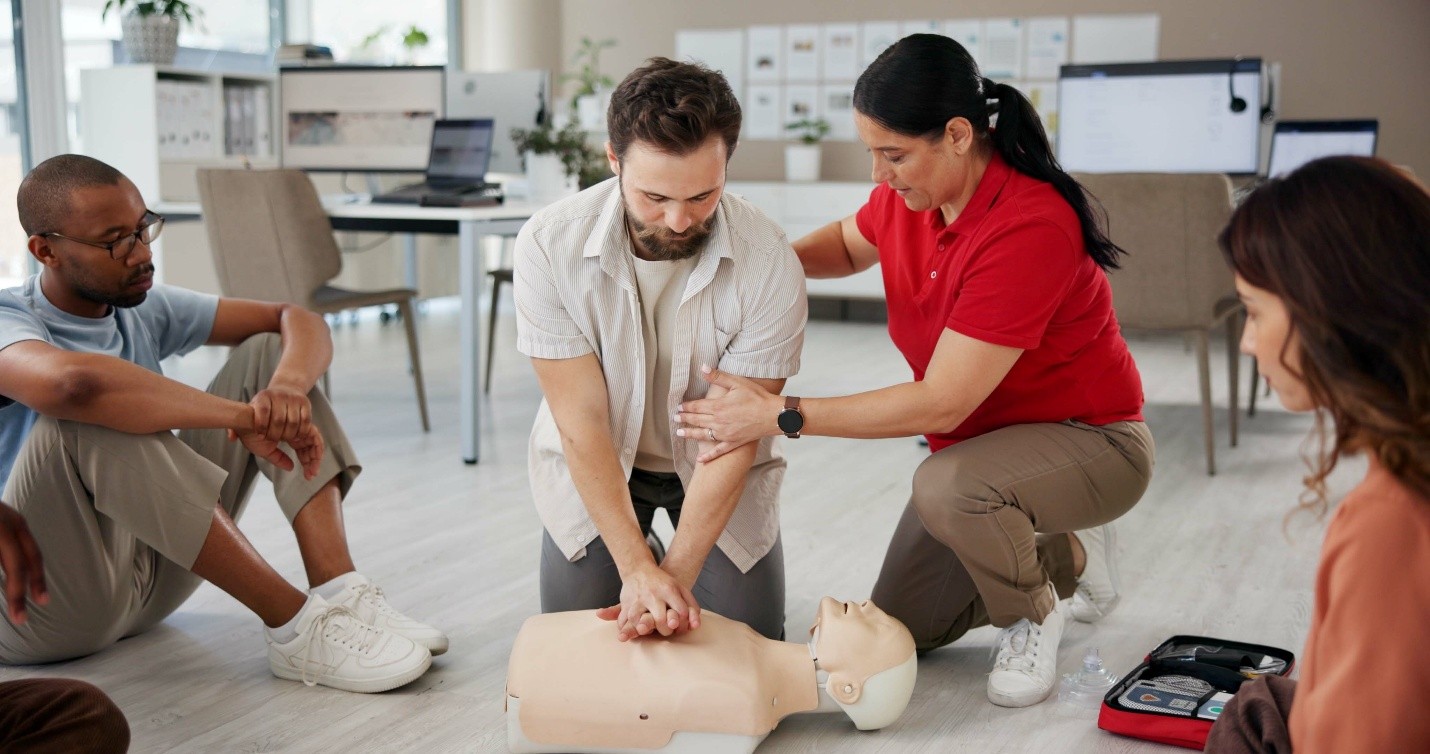
November is CPR & AED Awareness Month: a powerful reminder that saving a life from sudden cardiac arrest (SCA) takes more than luck. It takes preparation, training, and a coordinated response system.
Most organizations understand the importance of having a trained first aider or an Automated External Defibrillator (AED) on site. But the reality is this: Having an AED or a trained individual is not enough.
To truly be prepared, workplaces need a strategic, organization-wide response program.
The Reality of Sudden Cardiac Arrest
- Sudden cardiac arrest can happen anywhere, at any time, often without warning
- Survival decreases by 7–10% for every minute without CPR and defibrillation
- Immediate CPR and early AED use can double or even triple survival rates
- Many cardiac emergencies occur in workplaces or public settings, not hospitals
Despite this, delays in response are common; not because people don’t care, but because they’re not prepared to act quickly and confidently.
The Gap: Why “Having It” Isn’t Enough
Many workplaces check the box by:
- Training a few employees in First Aid/CPR
- Installing an AED in a central location
But during a real emergency, critical gaps often emerge:
- No one nearby knows where the AED is located
- Trained staff are absent or unsure of their role
- Bystanders hesitate due to lack of confidence
- Emergency response is uncoordinated or delayed
In a cardiac emergency, seconds matter, and confusion costs time.
Moving Toward a Strategic AED & Response Program
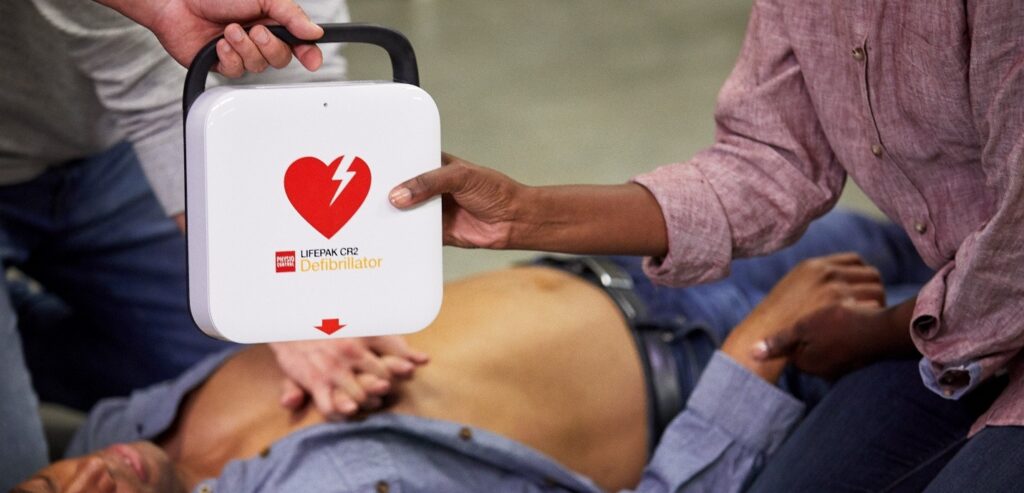
High-performing organizations are shifting from basic compliance to proactive preparedness.
A strong program includes four key pillars:
1. Widespread Training & Confidence Building
- Train beyond minimum requirements: empower more employees, not just designated responders
- Incorporate hands-on, scenario-based learning
- Reinforce that anyone can use an AED: they are designed for public use
The goal: Eliminate hesitation. Build confidence. Enable action.
2. Strategic AED Placement & Coverage
AED placement should be intentional, not convenient. Consider:
- Response time (Can it be retrieved within 3 minutes or less?)
- High-risk or high-traffic areas
- Large facilities, multi-floor buildings, or outdoor environments
One AED at reception may not protect someone on the warehouse floor, or the back 9 of a golf course.
3. Visibility, Awareness & Signage
- Ensure AEDs are clearly marked and easy to find
- Use consistent signage throughout the facility
- Regularly communicate locations and procedures to staff
In an emergency, people don’t rise to the occasion; they fall back on what they know.
4. Program Management & Readiness
An AED program is not “set it and forget it.” It requires:
- Routine inspections and maintenance
- Pad and battery tracking and replacement
- Designated program ownership
- Integration with your broader health & safety program
A non-functional AED is the same as having no AED at all.
Building a Culture of Emergency Preparedness
The most effective programs go beyond equipment and training; they create a culture of readiness.
This means:
- Encouraging employees to take ownership of safety
- Reinforcing that everyone plays a role in an emergency
- Conducting drills and refreshers to keep skills sharp
- Aligning emergency response with overall workplace safety strategy
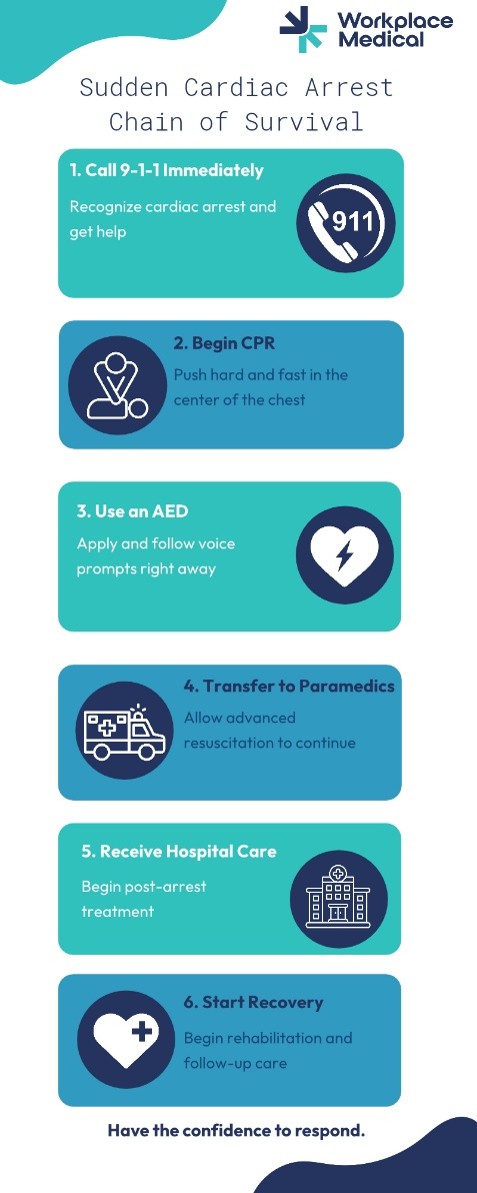
Preparedness Saves Lives
CPR & AED Awareness Month is not just about awareness, it’s about action.
When a cardiac emergency happens:
- There is no time to search
- No time to hesitate
- No time to figure things out
A strategic, well-designed program ensures your team can respond immediately, confidently, and effectively.
Is Your Workplace Truly Prepared?
If your organization currently relies on:
- A single AED
- A handful of trained staff
- Minimal program oversight
…it may be time to take the next step.
Because in an emergency, the difference between life and death often comes down to how prepared you are before it happens.
Contact us to learn more on how you can keep your organization prepared in an emergency.